Doha Layover Without a Tour
Short answer. Yes, you can do Doha on your own. The Red Line runs from a station under Terminal 1, a whole day costs a maximum of QAR 6, and the Gold Line reaches Souq Waqif and the National Museum. Allow forty minutes of overhead each way, and do not try it on a Friday morning.
Most sites that sell tours will not write this page. It is worth writing because the independent route in Doha is genuinely good, and because knowing what it involves is the only way to judge whether a guided departure is worth the fare. Here is the whole thing, honestly.
Can you do a Doha layover on your own?
Yes, and more easily than in most connecting hubs. The airport is a single building, the metro station sits under Terminal 1, the network is new and clean, and the city's sights run in a straight line up one coast. Nothing you would want to see needs a timed ticket.
The constraints are the border, the clock and the Friday morning shutdown. All three are knowable in advance.
Step one: clearing the border
There is no airside sightseeing option, so leaving means clearing Qatari immigration as an arriving passenger and returning through departures. Over 102 nationalities enter visa-free with a passport valid at least three months from arrival; everyone else pays QAR 100 online in advance through Hayya, or at the counter on the day.
Run your own passport through Qatar Tourism's checker before you plan anything else. Doha Layover timing and entry rules sets out the categories and links the official source.
What does the Doha Metro cost, and where does it go?
| Line | Runs | Useful stops | For a layover |
|---|---|---|---|
| Red (Coastal) | Al Wakra to Lusail, 40 km | Hamad International Airport T1, West Bay Qatar Energy, Katara, Legtaifiya, Lusail | This is your line out of the airport |
| Gold (Historic) | Ras Bu Aboud to Al Aziziyah | Qatar National Museum, Souq Waqif, Sport City | Change at Msheireb to reach the souq |
| Green (Education) | Al Mansoura to Al Riffa | Education City, Qatar National Library | Not useful on a layover |
The Doha Metro runs three lines, 37 stations and 76 kilometres, and a whole day on it costs a maximum of QAR 6. Trains come every six minutes and the average hop between stations is three. Children under five travel free, tickets come from station vending machines, and you tap in and tap out.
The Red Line from Terminal 1
The station is at Terminal 1, which is the terminal you are already in, because there is only one. Northbound takes you toward the city centre and on to Katara, Legtaifiya and Lusail; the tram network connects at the last two.
For West Bay, get off at West Bay Qatar Energy. For Katara Cultural Village, the station is called Katara. Both are essentially at the door, which is unusual and is the strongest argument for doing this yourself.
The Gold Line, and the change at Msheireb
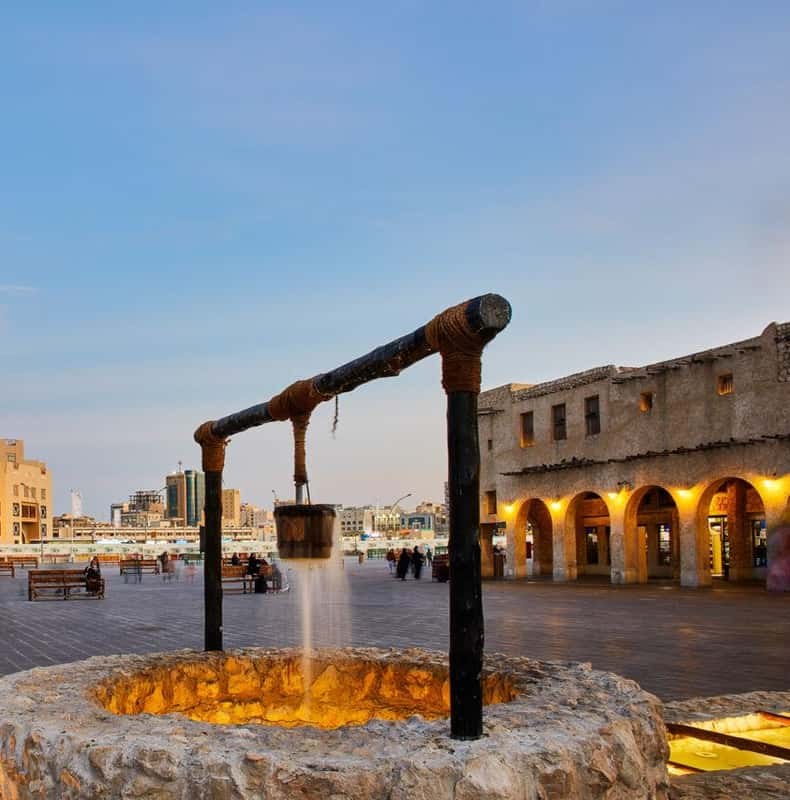
Souq Waqif and the National Museum of Qatar are on the Gold Line, not the Red one. Change at Msheireb, which is the interchange for all three lines and is itself worth looking at. From there Souq Waqif is one stop.
That change is the single biggest difference between the independent route and a guided one. It is not hard; it is simply time you spend on a platform rather than looking at something.
What the metro cannot do for you
- It does not know your flight number. Nothing adjusts if you land late.
- It does not carry your bag. Most layover passengers have only cabin luggage, but a souq with a wheeled case is not fun.
- It does not sequence the stops. The Pearl-Qatar and Lusail need a tram connection on top.
- It does not run on Friday mornings. The network shuts for prayers, and many museums and restaurants close at the same time.
- It does not explain anything. The souq is a market without a guide and a place with one.
Should you take a taxi instead?
Karwa taxis are available at the airport and metroexpress ride-share connects to stations. A taxi solves the sequencing problem and the bag problem in one, and on a short connection it is the fastest way to see the Corniche and get back.
What it does not solve is cost predictability — fares are not published in a form you can plan against — or the guide. On four hours with several stops and waiting time, a taxi starts to converge on the price of a guided departure without including anything a guided departure includes.
The transit desk inside the terminal
If you are not eligible for visa-free entry, Qatar's transit-tour desk sits in Duty Free Plaza South, behind the escalators, and will issue a transit visa for QAR 100. It serves passengers connecting for six hours or more, and it sells the airport's own tours as well.
It is a backstop rather than a plan. Arranging the visa online in advance and booking a departure before you fly means the vehicle is waiting when you clear the hall.
How long does the independent route actually take?
| Leg | Roughly | Note |
|---|---|---|
| Aircraft to immigration | 15–25 min | Single terminal, long piers |
| Immigration | Unknown | No published figure; varies by arrival wave |
| Walk to the metro, buy a ticket | 10–15 min | Vending machines at the station |
| Terminal 1 to Msheireb, change, to Souq Waqif | 30–40 min | Trains every 6 minutes |
| Your time in the city | Whatever is left | This is the part you are buying |
| Back to the terminal | 40–50 min | Same journey in reverse |
| Security and the walk to the gate | 45–60 min | Gate closes 20 min before departure |
Add it up on a six-hour connection and there is very little city left. On eight hours it works comfortably. That gap — roughly forty minutes of overhead in each direction — is the thing a guided departure is actually selling.
Friday, and the one morning this does not work
The metro shuts on Friday morning for prayers, and Qatar Tourism notes that many museums, restaurants and sights close at the same time. Both big museums open at 13:30 rather than 09:00.
If you land on a Friday morning and want to go out, a guided departure keeps moving when the network does not. One traveller describes exactly that: a Friday tour where the guide filled the closed hours with how the market actually works.
What it costs, side by side
| Doing it yourself | Cost | A guided departure | Cost |
|---|---|---|---|
| Entry, if not visa-free | QAR 100 | Entry, if not visa-free | QAR 100 |
| Metro, all day | QAR 6 max | The fare, per person | from $45 |
| Your own timing risk | Unpriced | Timing handled against your flight | Included |
| No guide | — | Licensed English-speaking guide | Included |
| Your own bag | — | Bag stays in the car | Included |
The money is not close. The value question is whether forty minutes each way, the sequencing and the guide are worth the difference, and on a six-hour connection they usually are. On a twelve-hour one, with a metro pass and no hurry, they may not be.
How do you buy a metro ticket?
From a vending machine at the station, and there are retailers that sell the cards too. You tap in at the start of the journey and tap out at the end, which is how the daily cap is applied — the maximum you can spend in a day is QAR 6 regardless of how many journeys you make.
There are three classes of carriage: Standard, Family and Goldclub, the last of which needs a card from a Goldclub office in one of the stations. For a layover, Standard is all you need. Children under five travel free.
What you can reach on foot once you are there
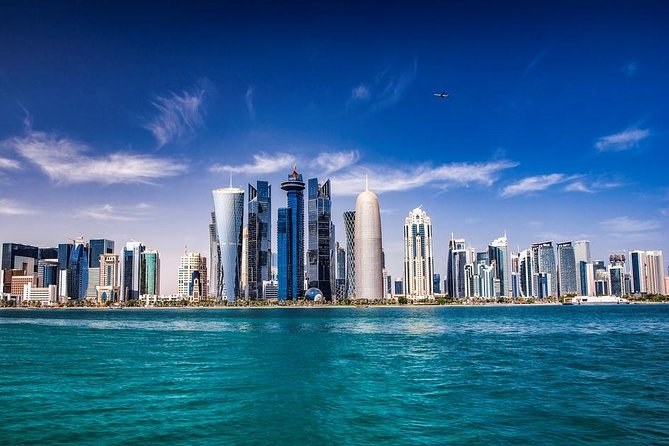
More than the metro map suggests. Souq Waqif, the Corniche and the Museum of Islamic Art sit at the same end of the bay, and the falcon souq is described by Qatar Tourism as within walking distance of the Corniche. Msheireb Downtown, the restored district, is a short walk from the souq as well.
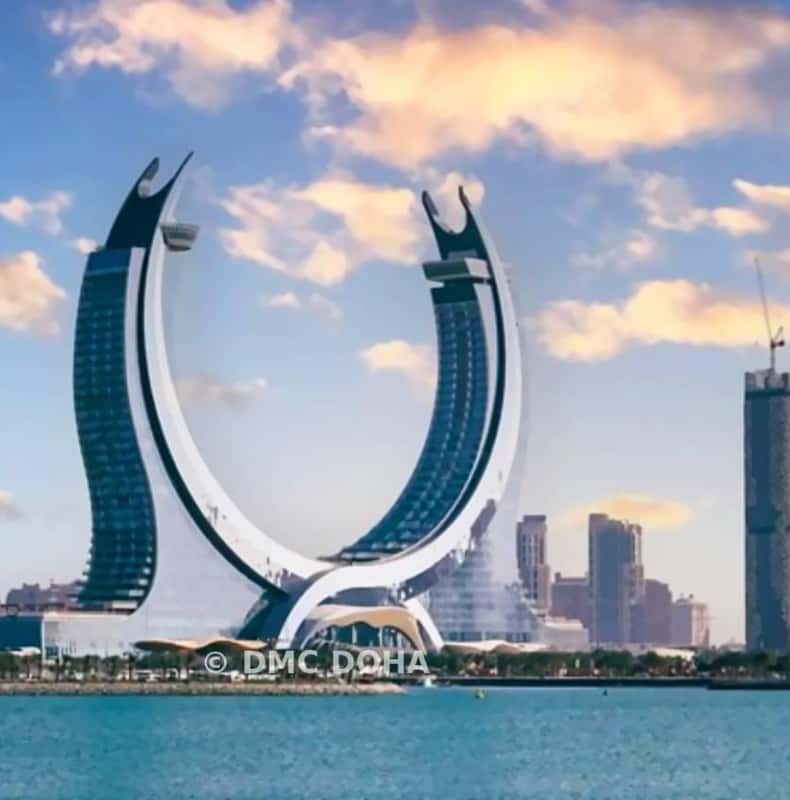
That cluster is the strongest case for the independent route. One metro journey, one change, and four of the things you came for are within a few hundred metres of each other. The Museum of Islamic Art is at the near end of it, on its own island off the Corniche, and it is the one building on that walk you can go inside. The stops that need a vehicle are the northern ones: Katara Cultural Village, The Pearl-Qatar and Lusail.
What do you do about your bag?
On a normal connection this solves itself, because your checked bag is tagged through to your final destination and never leaves the airside system. You go into the city with cabin luggage only, which is what makes the metro viable at all.
If you are carrying more than that, the independent route gets harder quickly — a souq is not a place to tow a case, and the airport publishes a baggage repack area rather than a left-luggage service. This is the point at which a private vehicle stops being a luxury: the bag stays in the car. The airport page covers the terminal end in full.
When to take a tour anyway
Take one if your connection is six or seven hours, if you are travelling with children or anyone who walks slowly, if you land on a Friday morning, or if you are connecting between June and September, when a July afternoon averages 41.5 °C and independent walking becomes a different proposition.
Do it yourself if you have ten hours or more, you have travelled in the Gulf before, and the point of the day is to move at your own speed. Both are good answers. Is a Doha layover tour worth it argues the other side, and every departure is compared on Doha Layover Tours.
Weighing it up? The Doha Layover tours map shows exactly how far apart the stops sit, which is what the metro change costs you.
Tours that remove the overhead