Doha Layover by Season
Short answer. In Doha the season does not decide whether you go out — it decides what time of day. Daylight moves barely three hours across the year, while the afternoon swings from 21 °C in January to 41.5 in July. November to March: any hour. June to September: after dark.
Most seasonal travel advice is about whether a place is worth visiting at a given time of year. Doha is worth visiting at any time of year; what changes is the hour you should be standing in a market. This guide sets the climate record against the daylight table and turns the two into a recommendation per month.
Does the season change a Doha layover?
Not in the way you would expect. Nothing closes seasonally, nothing depends on a bloom or a migration, and the tours run year-round. What changes is that a July afternoon carries a normal maximum of 41.5 °C and a January one carries 21.7. That is a thirty-two degree swing on the same walk through the same souq.
The second thing that changes, and it surprises people, is very little: daylight. Doha sits close enough to the tropics that the shortest day is 10 hours 34 minutes and the longest 13 hours 42.
The two tables that decide it
| Month | Mean max °C | Sunset | Daylight | Recommended departure |
|---|---|---|---|---|
| January | 21.7 | 17:05 | 10h 44m | Daytime |
| February | 23.0 | 17:27 | 11h 19m | Daytime |
| March | 26.8 | 17:42 | 11h 59m | Daytime |
| April | 31.9 | 17:56 | 12h 45m | Morning or evening |
| May | 38.2 | 18:11 | 13h 22m | Evening |
| June | 41.2 | 18:25 | 13h 42m | Night |
| July | 41.5 | 18:27 | 13h 34m | Night |
| August | 40.7 | 18:10 | 13h 02m | Night |
| September | 38.6 | 17:39 | 12h 19m | Evening |
| October | 35.2 | 17:07 | 11h 35m | Morning or evening |
| November | 29.5 | 16:46 | 10h 55m | Daytime |
| December | 24.1 | 16:46 | 10h 34m | Daytime |
Temperature figures are the Qatar Meteorology Department's normals for Doha International Airport, published through the World Meteorological Organization. Sunrise and sunset are computed for Doha; local time does not shift for daylight saving. Doha layover weather carries the full month-by-month detail.
Winter: November to February
The easiest connection of the year. Afternoons sit between 21 and 29 degrees, nights between 12 and 19, and Qatar Tourism describes the season as ideal for being outdoors. Any hour of the day works and the souq is comfortable at midday.
The one thing to watch is the early sunset. In November and December the sun goes at 16:46, the earliest of the year, so an afternoon arrival will see a lit city rather than a bright one. That is a different photograph, not a worse one.
Spring: March to May
March is still comfortable at 26.8 °C and is the last of the rain. April is the pivot, at 31.9, and Qatar Tourism names early April as one of the two best windows in the year for warm-weather activity. By May the afternoon reaches 38.2 and nights stop falling below 25.
The practical line falls somewhere in early May. Before it, book whatever hour suits your flight; after it, start looking at the evening departures first.
Summer: June to September
Four months where the afternoon runs between 38.6 and 41.5 °C, humidity reaches 40 to 60 per cent, and there is essentially no rain at all. Qatar Tourism's own advice is to seek shade between 10:00 and 16:00.
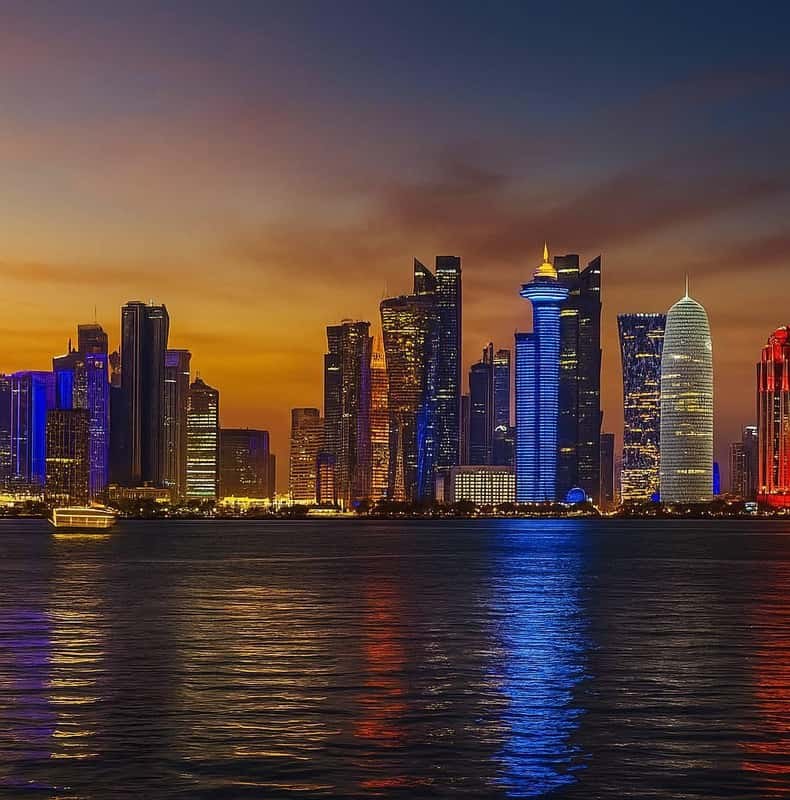
This does not mean staying in the terminal. It means going out after six in the evening, when the temperature has dropped, the souq is at its liveliest and the skyline is lit. Several departures are built for exactly that, and they are on Doha night layover tours.
Autumn: October
A month of its own. Afternoons fall back to 35.2 and nights to 23.4, a trace of rain returns, and by the end of the month a daytime circuit is comfortable again. Qatar Tourism names late October as the second of the year's two good windows.
If you have a choice of connection dates and want a daytime tour, late October and early April are the two to aim at.
Which month is best for a daytime tour?
January, on the numbers: the coolest afternoons of the year at 21.7 °C, and low enough humidity to walk a market comfortably at midday. December and February are close behind.
The trade in those months is the early sunset. If daylight photographs matter to you, March and late October give you both a comfortable temperature and a sunset after 17:40.
When should you book the night departure?
Any time between May and September without hesitating, and any time at all if the souq is what you care about. The market is better after dark in every month, the skyline only exists as a photograph when it is lit, and the fares on evening routes here are at the lower end.
What a night route costs you is the museum interiors, which close at 19:00. If a museum hour is the point of your stop, take a daytime route and book before seven.
What about Ramadan?
The shape of the day shifts: opening hours move, many places close in the afternoon and reopen after sunset, and eating or drinking in public during daylight is avoided out of courtesy. Evening is when the city comes alive, which makes an after-dark departure the natural choice.
The dates move each year against the Gregorian calendar, so check them against your own travel date. Tours run throughout and operators adjust their timings; Doha Layover visitor information covers what else changes.
Daylight, and why it barely matters here
This is the fact that separates Doha from a northern layover city. Between the shortest and longest day there are barely three hours of difference, and even in December there are more than ten and a half hours of light. You will never land in Doha and find that the day has already gone.
What that means practically is that you can plan by temperature alone. In a northern city you check the sunset first; here you check the thermometer.
What the season does to the desert run
The Inland Sea route is the one option genuinely improved by the cooler months. Dune driving and sandboarding in a 41-degree afternoon is hard work, and nearly three hours on open sand is exposure without shade.
From November to March it is the best version of a long Doha layover. Long Doha layovers sets out what it needs from your connection.
Is there a wrong month to connect through Doha?
No, and that is worth saying plainly, because seasonal guides usually end with one. Nothing closes for the season, the tours run year-round, and there is no month in which the city is unavailable to you. July is the hardest month for a daytime walk and the easiest month to find an evening departure with space on it.
What there is, instead, is a wrong hour — and the hour is entirely within your control at the booking stage.
What does the heat do to the stop list?
It shortens the walking rather than the itinerary. Reviews from the summer months describe the same pattern repeatedly: the guide keeps to the shade where there is any, provides more water than expected, and trims the time on foot without dropping stops. One traveller in August describes exactly that, on a day when the market was also shut for Friday prayers.
The stops that suffer most are the open-air ones with nothing overhead — the Corniche, the marina promenades and the desert. The souq has covered lanes and shade, which is another reason it holds up in every month.
Does it ever rain enough to matter?
Rarely, and never for long. The wettest month on the record is February at 17 mm across roughly two days, and the whole year totals well under a hundred. From May to September rainfall is effectively zero.
What that means for a layover is that you can plan an outdoor afternoon in Doha with more confidence than almost anywhere. It does happen — one traveller describes a rainy day in which the guide simply reordered the stops so nothing on the itinerary was missed — but it is not a risk you need to price in.
Humidity, and why the number understates it
Qatar Tourism puts summer humidity at 40 to 60 per cent. Against a 41-degree afternoon that is the part of the figure people underestimate: the temperature alone does not describe what walking a market in August feels like.
The practical consequence is the same as the temperature's. Between June and September, go out in the evening rather than the afternoon, keep the walking short and take the water the operator provides. Guides on summer routes are described carrying umbrellas for shade as a matter of course.
Which season suits which stop?
| Stop | Best in | Why |
|---|---|---|
| Souq Waqif | Any season, after dark | Lit, busiest and coolest in the evening |
| The Corniche | November–March | A walk rather than a car stop |
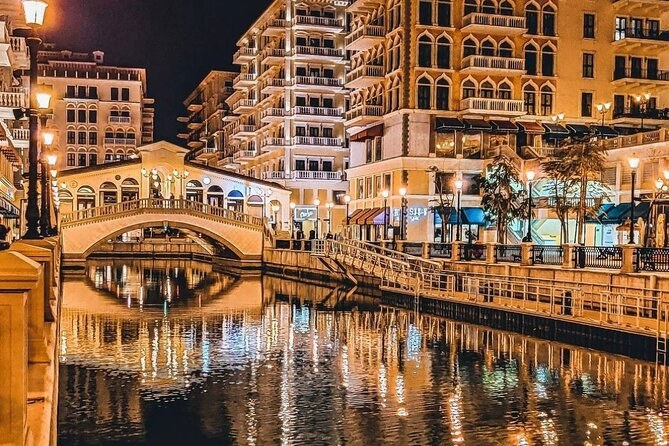
| The Pearl-Qatar | Evening, any season | The canal quarter is a lit walk |
| Katara Cultural Village | November–March | Open-air, and worth an hour on foot |
| The Inland Sea | November–March | Three hours on open sand with no shade |
| Museum interiors | Any season, before 19:00 | Indoors, and unaffected by the heat |
Read down that column and the pattern is clear: the indoor and after-dark stops are season-proof, and everything that involves standing in the open is a winter activity or an evening one.
A season-by-season recommendation
| If you are connecting in | Book | Because |
|---|---|---|
| November–February | A daytime circuit, any hour | 21–29 °C afternoons |
| March | A daytime circuit, or the desert | 26.8 °C and a later sunset |
| April–May | Morning, or evening | Rising fast through the thirties |
| June–August | A night departure | 40 °C+ afternoons |
| September | An evening departure | Still 38.6 °C at midday |
| October | Either, later in the month | Falling back to comfortable |
Whatever the month, every departure compared on Doha Layover Tours refunds in full up to 24 hours ahead, so a connection that moves does not cost you the fare.
Next: pick the hour, then pick the route — Doha night layover tours covers the after-dark departures in full.
Tours for the season you are connecting in
Transit/Layover Tours from Doha Airport – Explore Doha City
PrivateFree cancellation
From $59 per person